Showing posts with label UN. Show all posts

Thursday, December 18, 2025

Israel and Paraguays Relations

 Nadene Goldfoot                                           

                       The little pea-green state in the middle is Paraguay

Paraguay-Israel relations are strong and consistently pro-Israel, marked by shared values, support in international forums, and a recent re-establishment of Paraguay's embassy in Jerusalem in late 2024, reversing a temporary move to Herzliya. This strong bond, rooted in religious conservatism, historical support for Israel's creation (1947 UN vote), and shared resilience, sees Paraguay designating Hamas as a terrorist group, backing Israel after the October 7 attacks, and strengthening cooperation in tech, agriculture, and security, making it a key ally in South America. 
                                               

   Paraguay President Pena with Benjamin Netanyahu, PM of Israel 

What do we know about Paraguay?  The leaders are young.  

Paraguay, a landlocked South American nation, is roughly the sze of California (around 157,000 sq mi/406,000 sq km) wit a growing population estimated around 7-7.6 million (2025), known for its strong indigenous Guaraní culture, dual Spanish/Guaraní language use, and being an "Upper-middle-income" country with a significant urban population. Paraguay's people are predominantly Mestizo, speaking Spanish and Guarani, with a strong Catholic majority (around 70-90%), balanced with growing Evangelical Protestantism and smaller groups like Mennonites, Jews, and Muslims, all under a constitution guaranteeing religious freedom. This South American nation blends indigenous Guarani culture with Spanish colonial history, creating a unique national identity reflected in its faith and people. 


President:
Santiago Peña

Compare that to Israel today:  Israel is a fast growing country in the Middle East with a population of approximately 10.15 million people-far more than recent 7 million,  and a total area of about 22,072 square kilometers (8,522 sq miles).

  • Religious Affiliation (2023 est.):
    • 73.7% Judaism
    • 18.3% Islam                                                             VP: Pedro Alliana
    • 1.9% Christianity
    • 1.6% Druze faith 
  • Ethnic Groups (2025 est.):
    • 71.9% Jews
    • 21% Arabs
    • 7.1% Others (including non-Arab Christians, Baha'i, etc.)
  • 1. Paraguay moved its embassy to Jerusalem in 2018, then briefly back to Herzliya, before President Santiago Peña restored it to Jerusalem in December 2024, signaling renewed commitment
  • 2. Paraguay consistently supports Israel at the UN and other bodies, opposing anti-Israel resolutions.
  • 3. It officially designated Hamas, Hezbollah, and the Iran Revolutionary Guard Corps (IRGC) as terrorist organizations.
  • 4. The relationship is built on shared democratic values, resilience, and a historical connection, including welcoming Jewish immigrants.
  • Post-October 7th Stance: Paraguay was a staunch supporter after the 2023 Hamas attacks, with President Peña stating, "We will not abandon Israel," according to Latin America Reports and The Jerusalem Post.
  • Cooperation: The partnership extends beyond politics into technology, agriculture, and security, benefiting both nations.
  • Historical Roots: Paraguay voted for the 1947 UN Partition Plan for Palestine and opened diplomatic relations in 1949, maintaining strong historical ties. 

Tuesday, May 19, 2020

How Did Israel Survive After It's Birth in 1948 When War Was Already Happening?

Nadene Goldfoot                                           
Palestinian irregulars of the Holy War Army, approaching al-Qastal village near Jerusalem to take it back from Palmach.On the night of April 7-8, under the command of Abd al-Qadir al-Husseini, Palestinian irregulars counterattacked the Haganah occupiers of Castel. The Palestinians are seen here moving to the counterattack.
  The real question should be how did it manage to survive before its birth when in the womb, so to speak?  A Civil War was happening between the Arab and Jewish communities in Eretz YIsrael that started after November 29, 1947.  This war was started by the Arabs.  They refused to accept the UN partition resolution.  The proposed Arab state never came into being, the Arab areas being taken over by Jordan and Egypt, and the recommended economic union was not implemented.  These changes were incorporated in the Rhodes Agreements between Israel and Egypt, Lebanon, Jordan and Syria when the military phase of Israel's War of Independence was ended.  

From the beginning of April 1948, units of Arab irregulars  entered the country from Syria, Lebanon and Egypt to reinforce local Arabs in their attacks of Jewish communities and to block the main roads.  
                                                            

Then on May 14, 1948, the very day the Jews announced statehood, Eretz Yisrael was invaded by the regular armies of Egypt, Transjordan, Iraq, Syria and Lebanon and the Saudi Arabian contingent in about 5 minutes after the radio announcement.  
                                                       
Aftermath of the car bomb attack on the Ben Yehuda St., which killed 53 and injured many more.

The next day, Azzam Pasha, Secretary General of the Arab League, proclaimed in Cairo: "This will be a war of extermination and a momentous massacre which will be spoken of like the Mongolian massacres and Crusades." They had been known as the League of Arab States. The Arab League was formed in Cairo on 22 March 1945 initially with six members: Egypt, Iraq, Transjordan (renamed Jordan in 1949), Lebanon, Saudi Arabia, and Syria. Yemen joined as a member on 5 May 1945. Currently, the League has 22 members, but Syria's participation has been suspended since November 2011.  Their major trading partner was THE UNITED KINGDOM.  

The Egyptian army attacked and got as far as 30 km south of Tel Aviv.  Arab forces besieged Jerusalem. The Iraqi army got 15 km from the Mediterranean and threatened to cut Israel in two.  The Syrian army advanced west into the Upper Galilee and was set to amputate Israel's finger in the north. 
                                                      
War of Independence

Israel only had 650,000 population and really had no army to speak of at all. They depended on the Haganah to defend all these people and they were so poorly equipped to do so.  Yet they managed to drive back these invading forces.  It was a matter of do or die.  The fighters penetrated into the Sinai peninsula to drive out the Egyptian invaders.  Today Israel has a Jewish population of over 6 million, the very number they lost in the Holocaust from 1939-1945.  The need for the return to Eretz Yisrael was great as the climate was continually bad for them in the other parts of the world as it had been before WWII.  

"While the Jewish population was ordered to hold their ground everywhere at all costs, the Arab population was disrupted by general conditions of insecurity. Up to 100,000 Arabs from the urban upper and middle classes in Haifa, Jaffa and Jerusalem, or Jewish-dominated areas, evacuated abroad or to Arab centres to the east."
                                                    
Jewish fighters in War of Independence

6,000 Jews were killed in this War of Independence;  more than in all the subsequent wars combined.  

A truce was called and negotiations for an armistice began.  During 1949, separate armistice agreements were signed between Israel, Egypt, Jordan, Lebanon and Syria.  In each agreement it was laid down that the purpose was to create the transition from the truce to permanent peace.  Nobody foresaw that instead of leading to peace, the Egyptian agreement would dissolve in 7 years in another war, and the after 18 years, Jordan, Syria and Lebanon would also start another war with Israel.   


Israel has had to fight in 12 major wars:
1947-1949  The Israeli War of Independence
1956   The Suez Campaign
1967   The Six Day War
1973   The Yom Kippur War
1982   Operation Peace for Galilee
1985-2000  South Lebanon Conflict
1987-1993  1st Intifada
2000-2005  2nd Intifada
2006  Lebanon War
2008-2009  Gaza War
Operation Pillar of Defense  2012
Operation Protective Edge  2014  
                                                    

No nation should be forced to go to war time and time again, not in these centuries when people had created THE LEAGUE OF NATIONS to stop wars followed by the better plan of the United Nations.  
Knesset in Jerusalem
 No nation should be surrounded by neighbors who dream of its destruction-and by that I mean that Palestine, who does, should not become a state with Israel's original land.  That is close.  It's in Israel's back yard lot.  It's bad enough to have neighbors already who are just beginning to get used to Israel, hopefully now accepting peace with Israel.
                                                  

No nation should have to explain year after year that it has the right to live, and to defend itself over and over again. 

 No nation should be judged at the United Nations by Middle Eastern countries hatefully minded to Israel, and picked upon continually while other actual warlike nations are given the green light and their actions against others are ignored, never to be brought up for discussion.  
                                                        
Moshe Dayan 1915-1981
Haganah member as a teen, a founder of Palmah
lost his eye fighting in Lebanon when in British army.
In Independence fought Syrian army, was minister of
Defense of Israel just before 6 day war.  
Israel has had to do all these things.  
                                                          
Throughout all of this, Israel continues to progress and grow in a way that only benefits the world.  This happens in their scientific achievements in so many ways, now in medical ways, finding ways to fight the coronavirus for one.  She shares so much with the world while her hospital near Gaza has had to go underground from attacks of rockets, missiles and mortars.  

Israel is a miracle.  It's the most ancient of all countries and is here despite the unacceptance it has found for 3,000 years.  Israel has a purpose in mind, a job to do, to be a light for people, something to live up to in expectations of itself.  It notes when others have lent a helping hand when it was pushed down and trodded upon, which is not forgotten.  It's a light for them to show where their goal must be.  
    

Resource:                                        

Movie:  Cast A Giant Shadow with Kirk Douglas, Senta Berger, Frank Sinatra
Facts about Israel from Information, Foreign Affairs, Jerusalem
https://en.wikipedia.org/wiki/Arab_League
https://en.wikipedia.org/wiki/List_of_wars_involving_Israel

Wednesday, May 13, 2020

A World - Shaking Birthday on May 14, 1948

Nadene Goldfoot                                             
Our holy city of Jerusalem,
maybe on her 1st birthday
"If only the British had treated Arabs and Jews equally, and forced the Arabs to obey the law, the two groups might have learned to live together peacefully.

If only the British had permitted Jews to enter Palestine in reasonable numbers, the English and the Zionists could have joined with the Arabs to build a great land."
                                                             OR
If only the Arabs had decided to talk to UNSCOP, they might have made some telling points.

The refugees from Europe needed homes in Palestine because they weren't allowed into Western countries.  

The United States, though urging immigration into Eretz Yisrael, kept its own doors locked to the refugees.  During the first 8 months of 1946, America admitted only 4,767 refugees----barely the number on the ship, Exodus 1947. 
                                                     

 On that ship, the British sailors boarded and took control.  They wore uniforms and white helmets.  The British troops guarded a group of refugee children in Haifa when they were alongside the Exodus.  The ship's passengers were later sent back to Germany.  When the British seized the Haganah's leaky old ships, they would search for "illegal" refugees and send them back to detention camps in Cyprus.  

After World War II, Jewish survivors of Hitler's program against the Jews had nowhere to go.  There were 300,000 homeless DISPLACED PERSONS.  
                                               
  
The democracies of the West wouldn't accept them. 
 Britain refused to let them into Palestine.  
There was fighting between the Yishuv of Palestine and the British. 
 Irgun, a Jewish group of fighters, used violent tactics including blowing up British headquarters in Jerusalem. 
                                             
Stern Group warned King David Hotel
they would blow it up,
but British didn't listen

 My own 3rd cousin was the chief of Intelligence for the Stern Group-the toughest of them all that the Brits referred to as "The Stern Gang."
The Haganah, a very mild following the law group, confronted the British with boatloads of refugees.  

Britain finally turned the problem of Palestine over to the UN.  The UN Special Committee on Palestine (UNSCOP), shocked by British cruelty to the refugees on the ship, EXODUS 1947, recommended that Palestine be divided into Arab and Jewish states.  The UN accepted this recommendation on November 29, 1947.

None of these "its" happened.  As a result, battle lines had been drawn.
                                                  
                                                 
September 3, 1947's plan
     
THE PARTITION PLAN:  The UNSCOP report recommended that Palestine be divided into 2 states:  one Arab, one Jewish.  This is after the League of Nations and the United Nations had voted that Palestine become a Jewish State and that Britain was given a 30 year mandate to help keep order and to help the Jews to have their Jewish State.  Britain had failed to comply.  

Zionists were disappointed because of the need to control their holy city, Jerusalem.  They felt such a decision was neither fair and indefensible.  However, they went ahead and accepted the UNSCOP recommendation.

The Arabs rejected the report entirely.

It was up to the UNITED NATIONS to decide what to do.  

President Truman pledged American support of the UNSCOP Partition Plan
An Arab victory seemed certain.  
Russia surprised the world by announcing that it, too, would vote in favor of dividing Palestine and creating a Jewish state.  This was a first for Russia and the USA to vote together on any issue.  
                                               
                                                    
The voting began on November 29, 1947. 
Nations cast their vote one by one.
Most European States, many Latin American countries and members of the British Commonwealth joined the USA and Russia in voting.  
All Arab states opposed it.
Great Britain did not vote.
The end result was:  33 for of dividing Palestine into one Jewish and one Arab state.  13 against.    10 did not vote.  They had the needed 2/3 majority for approval.  
                                                        The UN had said the Jews could have a state in Palestine.  It was up to the Jewish leaders, the Yishuv, to make that state a reality.  

British soldiers watched Arabs riot toward the Jewish Quarter in Jerusalem.  They did nothing to stop the attack.  Some even shot the locks off the doors of Jewish shops to help Arabs loot and destroy.  

In reply to that, the Irgun broke into an Arab movie theater, setting it on fire.  
Their intention was to fight hard for their state and not let the Arabs stop them.
Arab forces attacked from every side, destroying and killing Jews.  No Jew was safe.  Arabs were controlling the roads connecting to towns.  By the end of March 1948, the country was cut apart.  Towns in the Negev couldn't communicate with the rest of the country.  Villages in the north were isolated.  Parts of Jerusalem were cut off from each other. 
                                                    
Chaim Weizmann 1874-1952
Israel's 1st President, had been a chemist.
Without his knowledge of organic chemistry, Britain may have
lost WWI.  
Weizmann and King Feisal, of Iraq in 1921 and king of Syria;  and  oldest son of Hussein, sherif of mecca in 1922 working
together after WWI to get a home for Jews
at League of Nations
Chaim Weizmann, the chosen president for the Jews, was old, sick and half-blind, but he made a long journey from London for an audience with President Truman who wouldn't even talk to the Yishuv.  The White House said there would be no meeting.
                                                         

However, and maybe this was a miracle;  Truman had had a business partner who was Jewish, Eddie Jacobson.  They had remained close friends.  Eddy admired Chaim Weizmann.  Weizmann was secretly admitted to the White House.  

This was not Weizmann's first merry go round.  42 years earlier he had met with Balfour and talked him into a life-long Zionist.  When Weizmann left the president, he had received a solemn promise that the USA would support the idea of a Jewish state.  
                                                     
 Jewish men and women coming to join Haganah
                    
David Ben-Gurion (Gruen) b: 1886- d: 1973
 
Ben-Gurion at age 67 and the Haganah thought that a Jewish state might not survive.  General Yigael Yadin of Haganah thought not, too because food and supplies couldn't be driven past Arab positions on the road to Jerusalem.  The Jewish Quarter was about to starve to death.  The British were handing over key locations to the Arabs!    

The Final Vote

On May 12, 1948, two days before the last British soldiers were to leave Palestine, General Yadin met with Ben-Gurion and his team.  Many key positions were now in Jewish control.  Morale was high.  But.....

Armies of 5 Arab states had massed to attack as soon as the English left.  The little Zionist army didn't have enough equipment.  They had bought some weapons in Europe but the British wouldn't allow them into Palestine for the Jews.  Could they even survive until the weapons could make it to them?

Everyone was telling the Jews not to go ahead as the danger was too high.  4 leaders voted for delay.  6 said NOW!  The future was decided by 1 vote.  

On Friday, May 14, 1948, the street outside the Tel Aviv Museum was filled up with a crowd of people.  At 4:00 pm, Ben Gurion read Israel's Proclamation of Independence.  
                                                            

A state was being launched in the land of its birthplace of the Jewish people.  It would guarantee equality to all its citizens, and freedom of religion and culture to all.  
     "We extend our hand in peace and neighborliness to all the neighboring states and their peoples, and invite them to cooperate with the independent Jewish nation for the common good of all."  

That night the Jews of Tel Aviv celebrated both a Shabbat and their independence from Britain and their birth.  No Jew in Jerusalem  had been able to hear the radio broadcast, however.  Arabs had cut off all electricity and were preparing to  attack.   I can imagine at least one or more rabbis wanting to thank those Arabs for helping them to keep Shabbat as the holiday that should take precedence.     
                                                                       
Israel finding herself in her War of Independence
29 November 1947-with Arabs responding with violence to UN resolution on Palestine and lasted until the signing of the Armistice Agreements in 1949.  

Such was Israel's 1st birthday, and now we celebrate her 72nd.  

Reference:
A young person's History of Israel 2nd edition by David Bamberger
https://en.wikipedia.org/wiki/United_Nations_Partition_Plan_for_Palestine
Facts about Israel; Division of Information, ministry for foreign affairs, Jerusalem.  

Tuesday, November 04, 2014

The Truth About Why and How Many Arabs Became Refugees in Palestine

Nadene Goldfoot                                                                 

"The fact that there are these refugees is the direct consequence of the action of the Arab States in opposing PARTITION and the JEWISH STATE.  The Arab States agreed upon this policy unanimously and they must share in the solution of the problem."  Emil Ghoury, September 6, 1948 to the Beirut Daily Telegraph.  "(Arabic: إميل الغوري‎, alternatively spelled Emil Ghoury) (1907–1984), a Palestinian Christian, was Secretary of the Arab Higher Committee (AHC), the official leadership of the Arabs in the British Mandate of Palestine. He was also the general secretary of the Palestine Arab Party.
In May 1947 Ghouri was nominated by the AHC as a member of its delegation to represent it before the United Nations in its special session for Palestine. 
In 1947 there were about 1 million Arabs in all of western Palestine. After the War of Independence that started on November 29, 1947 when Arabs responded with violence to the UN resolution on Palestine and the partion, the war lasted until the signing of the Armistice Agreements in 1949.  Then there were only 140,000 Arabs in Israel.  The total number of Arabs who left and became refugees couldn't have been more than some 420,000.  (p. 22) 
The partition plan had been a result of military operation and was different from the original scheme;  Jewish Jerusalem and the Jerusalem Corridor, western Galilee including Nazareth, Jaffa and certain sections of the Negev were incorporated into Israel.  The Arabs refused the deal so the proposed Arab state never came into being.  The  Arab areas were taken over by Jordan and Egypt, and a recommended economic union was not implemented, most likely due to the immediate attack on Israel as an answer to the partition.  All this had been started as far back as 1937 by the Peel Commission.  10 years of planning didn't get the result because the Arabs had wanted more, actually, as we have discovered later,  the whole state of Israel.  
Heads of state later inflated numbers; even Emil Ghoury was caught doing that, but records show what original facts were.  
Nearly half of the refugees were in the Gaza Strip; 155,000 out of 367,000.  The control of the Strip was in the hands of Egypt.  Jordan, Lebanon and Syria never restricted the movement of refugees or stopped them from trying to rehabilitate themselves as long as they didn't give up their refugee status.  Egypt, however, maintained a strict separation between "refugees" and the population of the area.  
This remained a refugee problem with a difference. Many of the Arabs who were in western Palestine had their neighborhoods annexed by Jordan in 1950.  In Syria and Lebanon the refugees took their support into their own hands and became fairly self supporting while continuing to supplement their earnings with free food, free medical supplies and shelter provided by UNRWA.  Those who were either unwilling or unable to work or who were forcibly prevented as those were in Gaza numbered less than 400,000 on the eve of the Six Day War, June 4, 1967.  The war lasted from June 5th to June 11th.  
I note this has been a huge problem today for Syrian refugees from their own Civil War with Assad.  Those that fled to Egypt had been promised refugee status by Morsi of the Muslim Brotherhood in order to garner more votes for himself, but he was kicked out and the refugees could then no longer sign up as refugees.  Some didn't even want to sign on as a refugee because then their movement was curtailed.  They would then be forced into refugee camps.  Those who didn't sign up were able to try to find jobs, though they were as hard to find as jobs are in the USA today.  With a Syrian passport they were only able to travel to Muslim countries.  Now UNRWA is faced with Palestinian refugees from 1948, the longest period of time for anyone to be on refugee status, and the newer refugees from today's wars in the Middle East.
In 1952, Jordan, Egypt and Syria all signed agreements with UNRWA to execute a plan for integration which was to cost the UN $200 million.  It was adopted by the General Assembly of the UN on January 26, 1952.  They never took any steps to implement the plan.  Not one single project was ever started.  The UN Secretary General at that time had been Norway's Trygve Lie.( b: July 6, 1896-d: December 30, 1968 at age 72.)    "As Secretary General, Lie supported the foundations of Israel.  His passionate support for Israel included passing secret military and diplomatic information to Israeli officials."  Being he was the first to this post, and there were many other problems in the world at the same time, this was left on the table. 
                                                                                   

The land of Palestine had been promised through the English Balfour Doctrine to become the Jewish Homeland, but before the ink on the paper was dry, England had given away 80% of the land to become Transjordan-later just Jordan-to Abdullah of Saudi Arabia who had been cheated out of his kingship there.  His reward for fighting was to be King of Transjordan.                                             
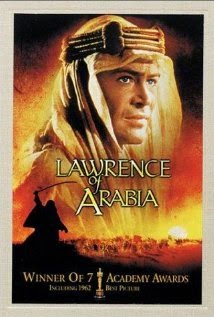
He was the one in the British made movie, Lawrence of Arabia,  who joined up with the British to fight against the Germans in the First World War (1914-1917).  The movie had Peter O'Toole as TE Lawrence, Alec Guinness as Prince  Feisal, and Omar Sharif playing as Sherif Ali, a fictional character in the movie.  I thought he was Abdullah. ( Between 1916 to 1918, working with the British guerrilla leader T. E. Lawrence, Abdullah played a key role as architect and planner of the Great Arab Revolt against Ottoman rule, leading guerrilla raids on garrisons).  Emir Feisal was the one brilliant Arab leader who was for Jews creating a state.  He hoped his own Arab people would benefit from them as they were skilled people who could uplift their status, and after all, they were cousins who also believed in one G-d. In real life,  "Abdullah's relations with the British Captain T. E. Lawrence were not good, and as a result, Lawrence spent most of his time in the Hejaz serving with Abdullah's brother Faisal who commanded the Arab Northern Army."
Out of the 20% left which is western Palestine, the Israelis are expected to allow enough land to become a Muslim -Only -Palestine for the Arab refugees.  Other Arabs, 1.7 million, are already full citizens of Israel who didn't flee from the Jews at the sign of Arab attack, but stayed and held onto their homes regardless.  Those who became refugees had been promised by their Arab leaders not only their own homes back but those of the Jews also, so wound up with nothing.  Here, greed (coveting) did not pay off at all.  
Resource: Battleground by Samuel Katz, p. 22, 26-27, etc.   
http://en.wikipedia.org/wiki/Emil_Ghuri
http://www.imdb.com/title/tt0056172/
http://en.wikipedia.org/wiki/Lawrence_of_Arabia_(film)
http://en.wikipedia.org/wiki/Abdullah_I_of_Jordan
The New Standard Jewish Encyclopedia on partition